I Was 53, at the Top of My Career, and I Quit. Here's What Nobody Tells You.
Exactly one year ago today, I walked away from my role as Managing Director JAPAC at HubSpot. I left because I chose to retire. And when I told people, the looks on their faces told me everything.
Aug 25, 2026
Exactly one year ago today, I walked away from my role as Managing Director JAPAC at HubSpot.
Not because the business was struggling. Not because I was pushed. We had driven a genuine turnaround - real performance, real results, the kind of momentum that makes you feel like you're building something that matters.
I left because I chose to retire. And when I told people, the looks on their faces told me everything.
Confusion. Concern. A little envy. And almost always the same question - "But… why would you retire now? Everything is going so well. And you're only 53!"
I kept coming back to a single word - retirement. And something about it didn't sit right with me. Retirement felt like an ending. What I was actually doing was something else entirely.
I was reframing.
Reframing my life to take back control of my time. To prioritise my health. To finally do all the things I had been quietly deferring for years while I chased the next deal, the next quarter, the next business trip. It was time.
What happened six weeks later
Within six weeks of "retiring," I launched Growth Getters.
It wasn't a grand strategic plan. People in my network kept reaching out to me - sales leaders navigating hard transitions, executives who felt stuck in their career, founders who needed a sounding board. I realised I had something more to give.
However when I looked at the executive coaching market, I hit a wall. It was so overcrowded. Every coach had a framework, a methodology, a brand. Yet their differentiation was thin.
Then something became obvious.
Most executive coaches have never carried a number in their life. They've never sat across from a CRO trying to explain a missed quarter. They've never done four to six months a year on planes to help the team hit their target. And when they coach tech sales leaders, the first 15-20 minutes of every session gets wasted bringing them up to speed on context that any practitioner would already know.
This is why almost all of the leaders I work with pay for coaching out of their own pocket, even when their company provides coaches through internal coaching programs. It's not just a question of confidentiality, though that matters too. It's that they're tired of paying for someone to learn their world on their time.
I had spent decades in the trenches of enterprise tech sales across APAC and globally. I had walked in those shoes. So I narrowed the focus to be sales leadership coaching for tech sales leaders, by someone who has actually done it.
Since then I've had the genuine privilege to be able to work with sales leaders from Google, Notion, Cisco, HubSpot, Aigentsphere, Salesforce, Creatio, SAP, Emarsys and IBM to name a few. It's meaningful work and the trust that they each have placed in me is something that I continue to be humbled by.
The work I love most, and why it matters
Of everything I've done with Growth Getters, the work I find most energising is coaching leaders through leadership transitions. From individual contributor to first-time manager. From front-line manager to second-line leader.
These are the moments that make or break careers and most companies handle them poorly. They promote their best performers, hand them a new title, and largely leave them to figure out the rest on their own. The skills that made someone exceptional as a rep are often exactly the wrong instincts for leading a team.
Companies don't train for this. They just promote. And then wonder why so many first-time managers struggle to lead.
The work evolved, as it always does
Growth Getters also morphed into Fractional CRO work with a number of Australian tech scale-ups trying to move beyond founder-led growth. Companies at a critical inflection point where the founder has been the entire sales engine, and now they need to build a real commercial function. I've loved this work. The impact has been both immediate and tangible.
I've also been giving back to community organisations I've been passionate about for years by helping with technology strategy, or taking a Board seat where I can contribute at a governance level. That piece has meant more to me than I expected. The simple joy of just giving back.
What "retirement" actually looks like
I took a massive pay cut and it was the best decision I've made in decades. I say that knowing full well that this is a choice that few people have the luxury to do. I am so grateful for the financial rewards of 35+ years working in the technology sector through a successful executive career. I don't take that lightly and am grateful for the spoils this has afforded my family.
I now work four days a week. I control my schedule. I do only work I genuinely want to do. I don't carry a monthly sales number. I don't spend half the year on planes. I'm not performing for someone else's agenda.
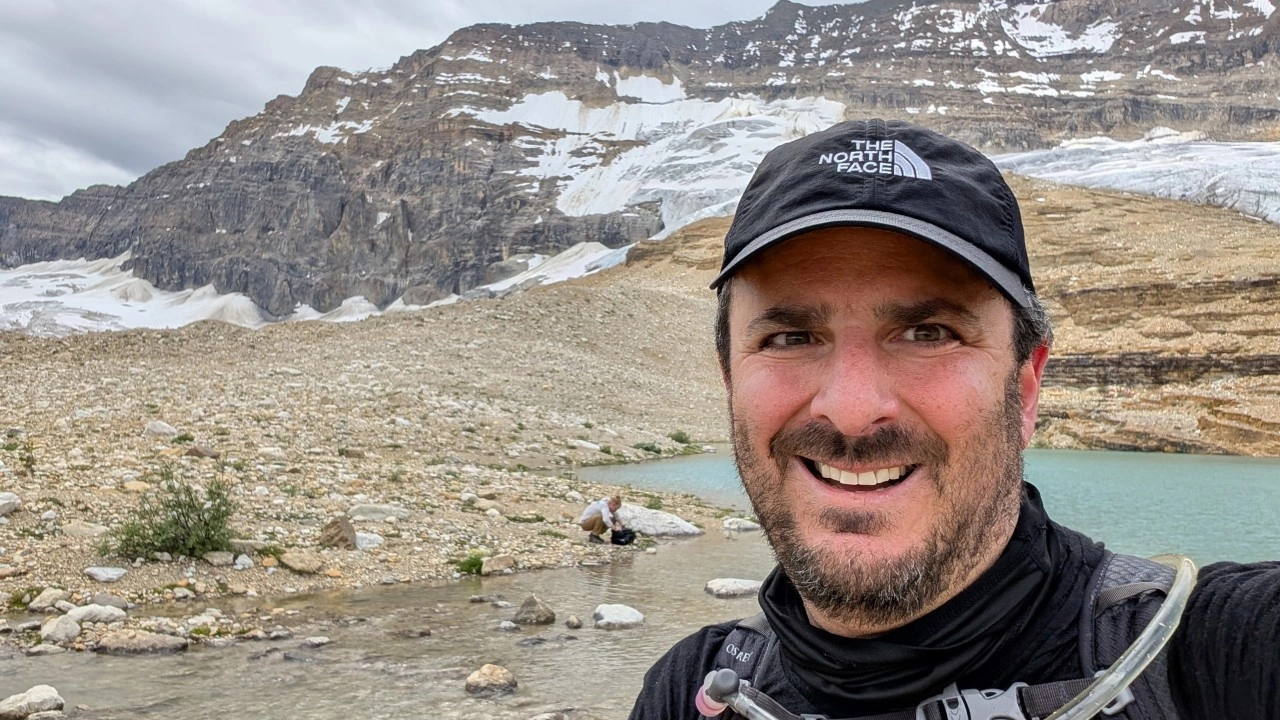
In between work I've hiked the Rockies in Canada. I've walked the Larapinta Trail in the Northern Territory of Australia, I have travelled to Europe with my wife. Earlier this year I walked 600 kilometres across Spain and France on the Camino Francés, something I have wanted to do but never had the time for till now. I work out multiple times a week, often in the middle of the day. I have lunch with my aging parents, I drop my daughter at TAFE, I get up at a crazy hour to watch the Premier League with my son, I have day dates with my wife and yes, I've been known to have a "nanna nap" when the yearning is there.
None of that was possible before.
Am I earning what I used to earn? Not even close. Am I happier and healthier than I've been in decades? Absolutely.
The thing nobody warned me about
Here's what I didn't see coming - figuring out who I am without a title.
So much of my identity had been tied up in my career - the role, the company, the seniority, the business card. When those things were gone, there was a confronting question sitting underneath all of it that I was forced to question - who am I without any of that?
I don't think I'm alone in this. I think it's one of the most quietly universal experiences among senior leaders, and almost nobody talks about it publicly because admitting it feels like weakness. It isn't. It's just honest.
Working on that question, stripping away the title and sitting with what's actually left, has been one of the most unexpectedly rewarding parts of this past year. To be clear, I'm still figuring it out. But for the first time in a long time, I'm actually doing the work.
The thing I haven't figured out yet
As incredibly supportive as my wife and children have been, my family doesn't see a man who's finally found balance. They see someone who is still working four to five days a week, sitting for long hours in front of their computer on Zoom, often at the expense of family time.
And they're not wrong.
Even though I experience my work week as a dramatic reduction in pressure, they experience it as time I'm still not fully present with them. That gap between how I see it and how they experience it is something I sit with. It's uncomfortable. It should be.
Finding the right balance with my family is the most important project I have going right now and the one I'm most committed to getting right. After so long being patient and supportive I not only owe this to them, I want to be present for them.
The word that changed everything
I didn't retire. I reframed.
If you're a senior leader who feels like the only options are keep going or stop entirely, I'd push back on that framing. There is space in between. Space to do meaningful work on your own terms, to finally invest in your health, to figure out who you actually are when the title is gone.
Most senior leaders that I know are waiting for the right moment to make that move.
So let me ask you directly - what exactly are you waiting for?